
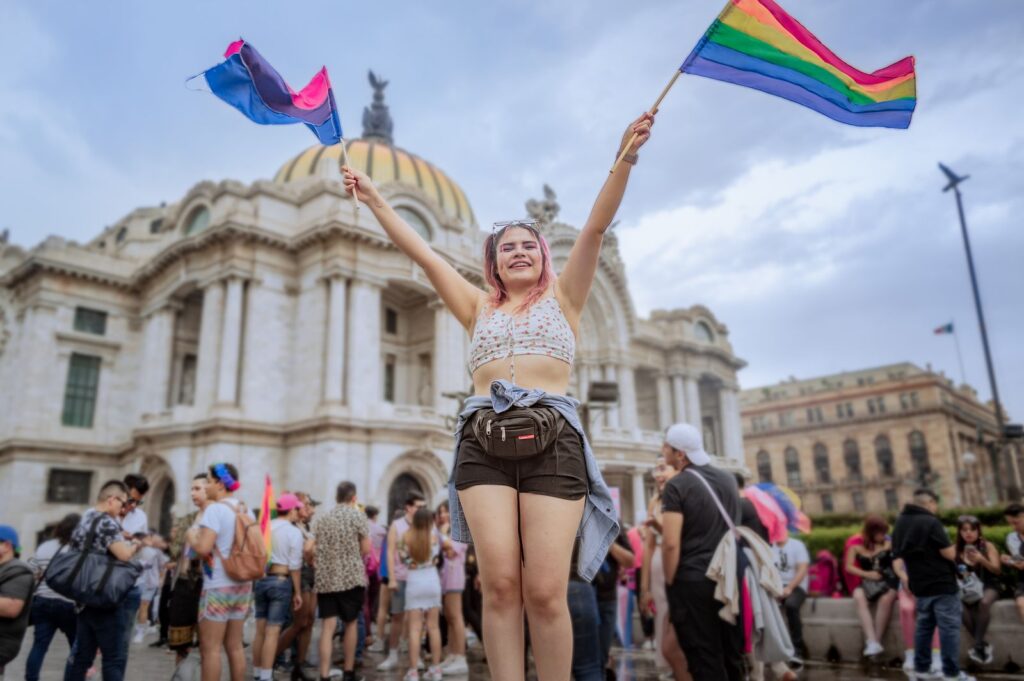

Today, September 16, is the start of Bisexual+ Awareness Week, which runs through Celebrate Bisexuality Day on September 23. If you’re a bi+ mom, dad or parent, or you love one, it’s a good week to make sure that part of your family’s story doesn’t get lost.
Where the week comes from
Celebrate Bisexuality Day came first. It was first officially observed in 1999, and activists Wendy Curry, Michael Page and Gigi Raven Wilbur are credited with creating it. The weeklong observance followed in 2014. The Washington State LGBTQ Commission says GLAAD co-led that first #BiWeek with BiNet USA. Today you may also see September 23 called Bi Visibility Day or Bisexuality+ Day.
Bi+ parents are a big part of our community
A July 2024 report from the Williams Institute at UCLA School of Law offers a helpful picture. It estimated that 18% of LGBTQ adults in the U.S., about 2.57 million people, were parenting children under 18.
Among those parents, cisgender bisexual women were by far the largest group, at about 6 in 10. Cisgender bisexual men made up another 11%, compared with 5% for cisgender gay men and 14% for cisgender lesbian women.
The report also found that many bisexual women raising children were doing it on their own: 43% of cisgender bisexual women who were parents were single. That’s a reminder that support for bi+ parents should include solo parents, too.
Why visibility can take extra effort
People often guess a parent’s identity from who is standing next to them. A bi mom with a husband may be read as straight. The same parent with a wife may be read as a lesbian. A single bi dad may have people making either assumption. None of those guesses changes who someone is, and a relationship or a solo season doesn’t make anyone more or less bi.
It also means family resources, school events and parenting groups may not feel obviously welcoming to bi+ parents unless someone says so.
What families can do
- Use the word. Say “bisexual” in an ordinary, positive way. For young children, try: “Being bi means someone can love people of more than one gender.”
- Share what feels right. Parents get to decide when and how to talk about their own identity. Keep it age-appropriate, and let questions come back over time.
- Don’t out anyone. Before posting a photo or story for the week, check with everyone it involves, including your kids.
- Mark September 23 your own way. Wear the pink, purple and blue of the bi flag, make a favorite dinner or tell your kids about someone who helped you feel accepted.
- Check your parenting spaces. If you help run a family group, make sure its welcome message names bisexual parents and doesn’t assume what anyone’s partner looks like, or that they have one.
- Find connection. Solo and partnered bi+ parents alike can look for a local LGBTQ+ center or family group and ask whether bi+ parents take part.
- Leave room for teens. If your child is exploring their own identity, listen without pushing for a label.
Every bi+ parent’s family looks a little different. Whether yours has one parent or several, new partners or longtime ones, you belong in the picture this week and every other week of the year.
Sources: Washington State LGBTQ Commission, Bisexual Awareness Week; Wikipedia, Celebrate Bisexuality Day; Williams Institute, “LGBTQ Parenting in the US” (July 2024).